
How Does Professional Teeth Whitening Work?

It’s easy to see why teeth whitening is such a popular treatment: a brighter smile has a big impact on your entire look. But if you’ve ever wondered what’s actually happening during a professional teeth whitening session, you’re not the only one. Is it just stronger “bleach”? How safe is it? How is it different from store-bought kits?
Let’s take a closer look at how professional teeth whitening works and why it delivers results you can truly see.
Why Teeth Become Stained in the First Place
Teeth are strong, but they are not stain-proof. Every day, your enamel interacts with the foods, drinks, and habits that make up your routine. Those little exposures add up with time.
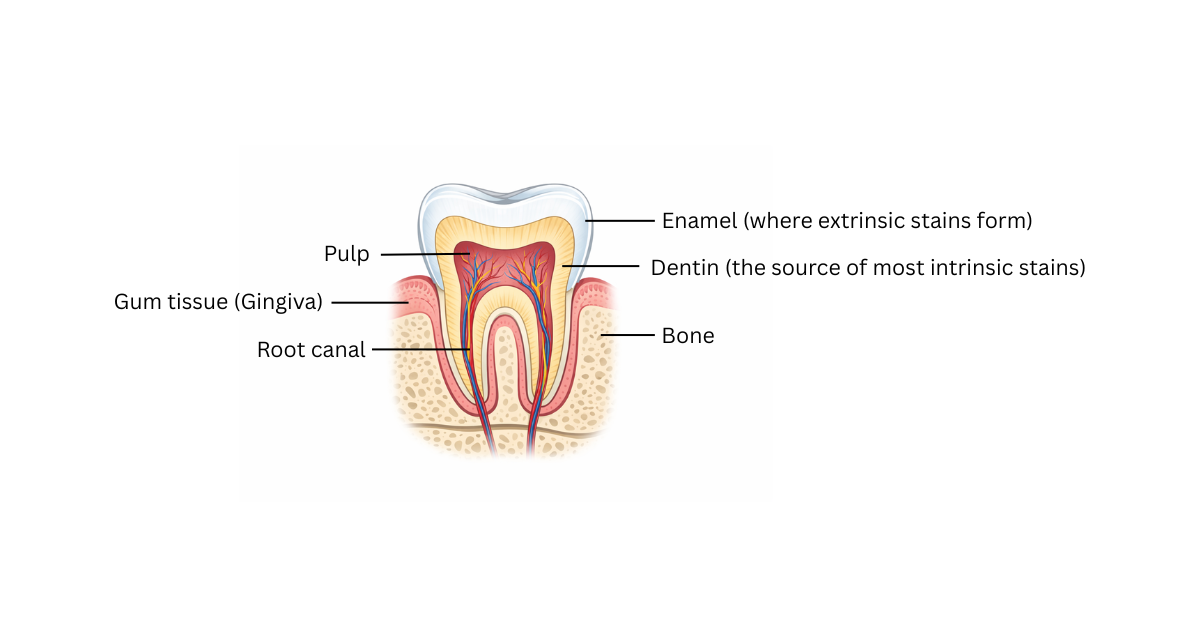
To understand why teeth darken, it helps to look at how they are built. The outer layer of your teeth is called the enamel. It is incredibly durable, but it is also slightly porous. Beneath the enamel lies dentin, which has a naturally yellow tone. As enamel thins with age or wear, more of that underlying color can show through.
Stains generally fall into two categories:
Extrinsic Stains: Surface-Level Discoloration
These stains sit on the outer enamel. They are usually caused by highly pigmented foods and drinks such as:
Coffee
Tea
Red wine
Dark sodas
Berries
Tomato-based sauces
Tobacco products
The pigments from these items cling to the enamel and settle into its pores. Even with good brushing habits, some of the stains can remain, especially if they have built up gradually.
Professional cleanings can remove many surface stains, but deeper buildup often requires whitening to fully lift the discoloration.
Intrinsic Stains: Deeper Changes Within the Tooth
Intrinsic stains develop inside the tooth, beneath the enamel. These are not caused by surface buildup alone. Instead, they result from changes within the tooth structure itself.
Common causes include:
Natural aging
Certain medications taken during tooth development
Trauma or injury to a tooth
Previous dental treatment, such as root canal therapy
In these cases, brushing alone will not remove the stains because the discoloration is not sitting on the surface.
The Science Behind Professional Whitening
Professional teeth whitening is not about scrubbing stains away so much as it is about changing them at a microscopic level.
The active ingredients used in professional whitening are typically hydrogen peroxide or carbamide peroxide. These compounds release oxygen molecules when applied to the teeth. Those molecules then move through the enamel and into the dentin beneath.
Once inside the tooth structure, the oxygen interacts with stain molecules. Many stains are made up of large, complex molecules that absorb light in a way that makes teeth appear darker. The whitening process breaks those large molecules into smaller, less visible ones. When the stain molecules change, they reflect light differently. As a result, the tooth looks lighter.
It’s important to note that professional whitening is designed to work without damaging healthy enamel. The goal is to safely alter the compounds causing discoloration without thinning the tooth itself.
Why Professional Teeth Whitening Works Better Than Store Kits

You can find whitening strips, pens, and trays in almost every pharmacy. Some patients do see mild improvement with these products, but professional treatment offers several important advantages.
First, the whitening agents used in a dental office are carefully formulated and monitored. The strength is appropriate for noticeable results while still protecting your enamel and soft tissues.
Second, professional whitening is customized. Store-bought trays are designed to fit “most people”, which often means they fit no one perfectly. Gaps in the tray can lead to uneven results. Gel that leaks out can irritate your gums.
With professional whitening, the product stays where it belongs. A barrier is placed on the gums to prevent the gel from touching them. The coverage is even, which means the outcome is more predictable.
Most importantly, we evaluate your teeth beforehand. This will be necessary because not all discoloration responds the same way. A professional assessment ensures whitening is a good fit for your smile and your goals.
In-Office Whitening: Faster, Noticeable Results
For patients who want a quicker transformation, in-office whitening can deliver noticeable brightening in a single visit.
The process begins by protecting your gums and lips. We then apply a professional-grade whitening gel directly to the teeth. The gel remains in place for 20-minute intervals, allowing the whitening agents to penetrate and begin breaking down stains.
The number of intervals your treatment will include will depend on the type of results you’re trying to achieve. After each round, you’ll be able to look at the progress and decide if you want to lighten your teeth more.
In-office whitening is especially helpful before special events, photos, or milestones when you want results on a shorter timeline.
Custom Take-Home Whitening Trays
If you prefer to whiten your teeth gradually, custom take-home trays offer flexibility without sacrificing effectiveness.
The process starts with precise impressions of your teeth. From those impressions, we create trays that match your smile exactly, right here in our lab. This close fit allows the whitening gel to sit evenly against the enamel and reduces contact with your gums.
We will provide you with our professional-grade whitening gel and clear instructions on how long to wear the trays each session. Over the course of several days or weeks, depending on how often you use them, your teeth will gradually lighten.
Many patients appreciate this method because it allows them to control the pace of whitening. It also makes future touch-ups simple and convenient.
Is Professional Teeth Whitening Safe?
When supervised by a dental professional, teeth whitening is considered very safe for most patients. Before recommending treatment, we examine your teeth and gums to ensure everything is in good condition. Cavities, gum inflammation, or exposed root surfaces should be addressed first. Healthy enamel allows for more effective whitening and a much more comfortable treatment experience.
How Long Does Teeth Whitening Last?
One notable benefit of professional teeth whitening is its long-lasting results. With that said, your daily habits will also continue to influence the color of your teeth. Drinks like coffee and tea can gradually reintroduce surface staining, while tobacco use can darken enamel quickly.
The good news is that maintaining your results is easy. With consistent brushing and flossing and regular professional cleanings, you can enjoy your brighter smile for years.
Is Professional Teeth Whitening Right for You?
Professional whitening works especially well for natural teeth with yellow or surface-based stains. Whitening will not change the shade of crowns, veneers, or bonded areas, but that doesn’t mean restorations like these can’t be lightened as well. We will be happy to discuss additional treatment options so you can be sure your teeth will have a uniform appearance.
The best way to know if whitening is right for you is through a personalized evaluation. We can assess your current shade, talk about your goals, and recommend a plan that fits comfortably into your lifestyle.
A Brighter Smile Starts with the Right Plan
Teeth whitening works best when it’s tailored to you. The condition of your enamel, the type of stains you have, and your long-term goals all matter.
If you’re curious about what professional whitening can do for you, we would love to walk you through your options. Schedule a consultation with our office in Ft. Pierce to get started on your personalized treatment plan!